Avionics Power Distribution Management System
This avionics power distribution project involved the development of a bespoke power management platform for a demanding aerospace application. The system consolidates multiple power sources, provides redundant high-current switching and fault-tolerant power routing, and packages the electronics within a lightweight architecture designed around strict SWaP constraints.
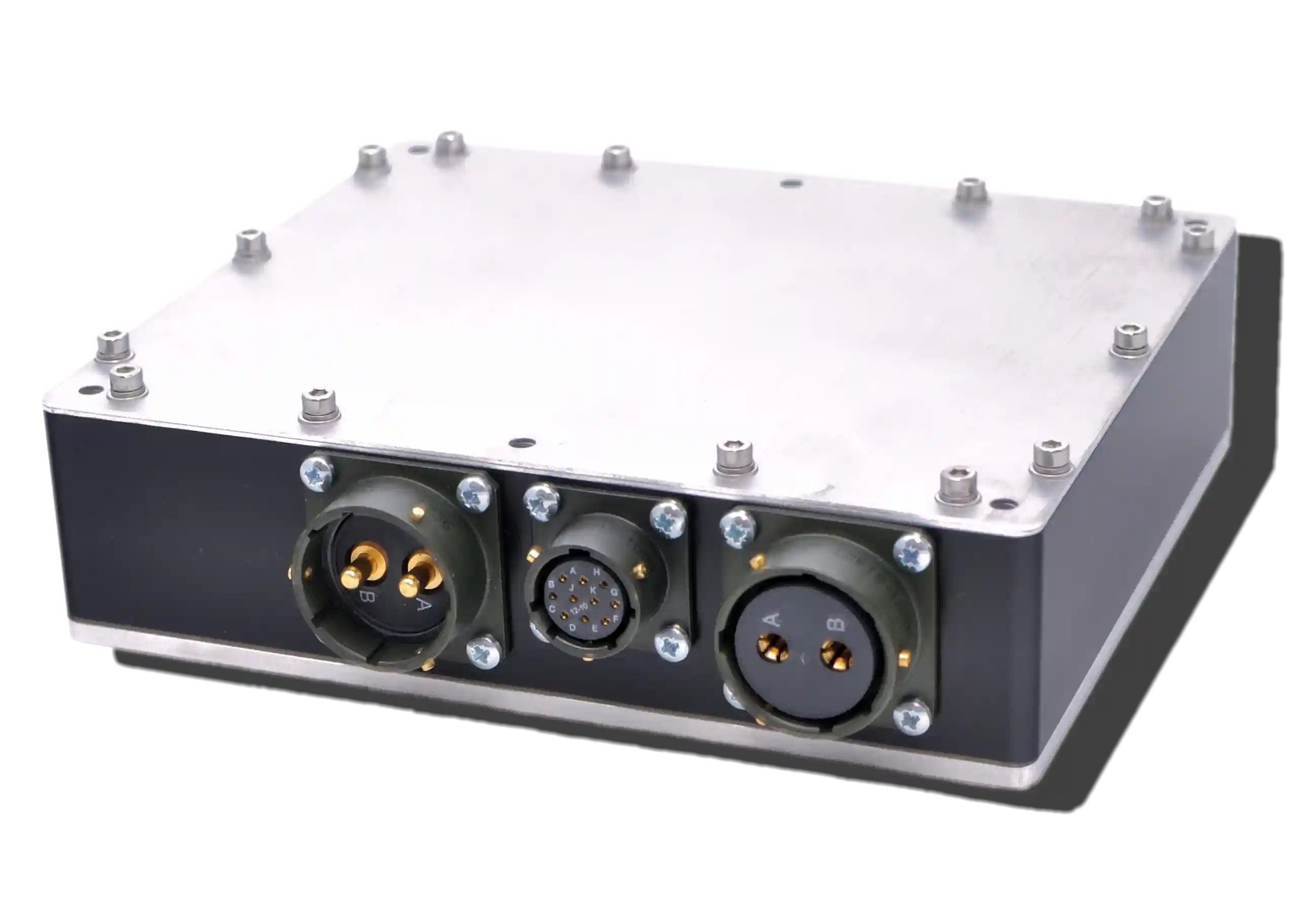
Avionics Power Distribution Key Features:
- Multi-Source Power Management: Manages a 700V primary battery, 24V secondary battery, fast charger and ground power unit.
- 2oo3 Majority Voting: Redundant decision architecture for fault-tolerant power routing.
- Hot-Standby Operation: Seamless changeover of power routing in the event of a fault.
- High-Current Switching: Power electronics designed to switch very large DC currents.
- High-Reliability PCB Assemblies: Base-plate cooled electronics designed for high shock and vibration environments.
- Ruggedised Interconnects: Durable Amphenol connectors and custom wiring harnesses.
- Lightweight Packaging: Strengthened plastic enclosures selected to support SWaP and structural requirements.
- Embedded Monitoring: Microcontroller-based housekeeping, status monitoring and avionics communications.
- Scalable Architecture: Modular design allowing system capacity to be adjusted with minor software and connector changes.
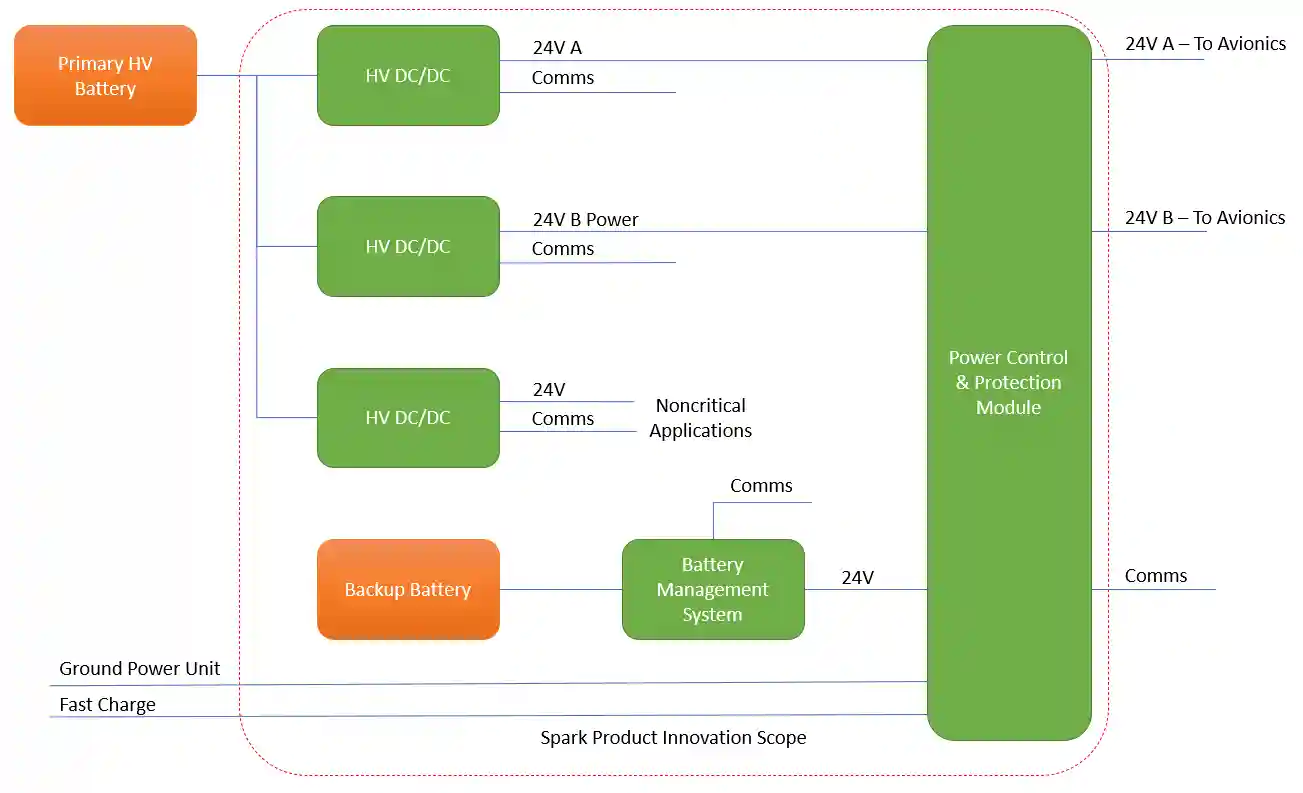
Avionics Power Distribution System Architecture:
The system consolidates multiple aircraft power sources through a redundant Power Control & Protection Module. A 2oo3 majority-voting architecture provides fault tolerance, while the hot-standby configuration enables the system to change power routing seamlessly if a fault is detected.
The hardware is split across three lightweight high-reliability enclosures: the battery pack and battery-interface electronics, the high-voltage DC/DC converters, and the Power Control & Protection Module.
Battery Pack & Battery Management:
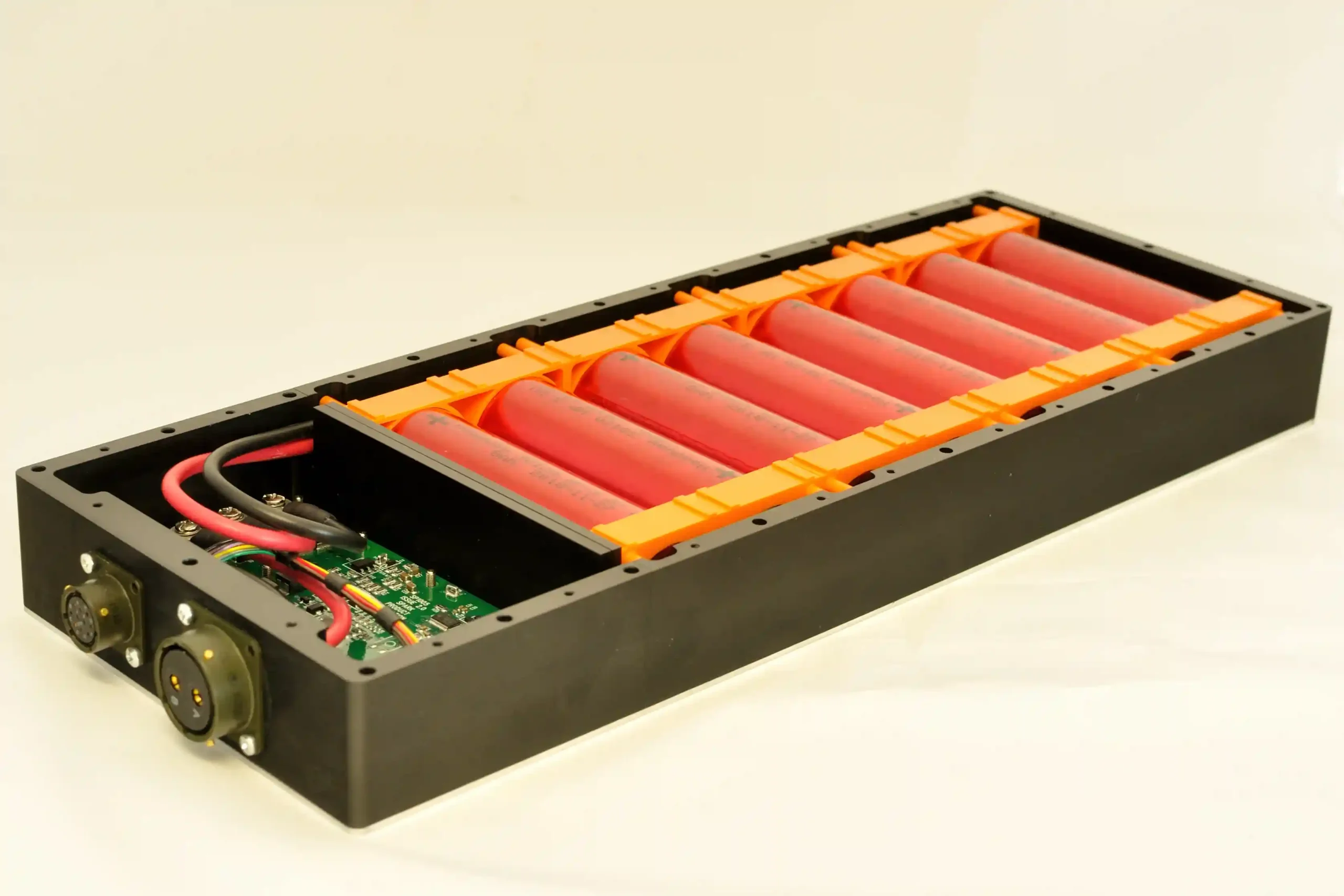
The auxiliary battery pack uses rechargeable lithium iron phosphate cells selected for high discharge capability and reduced risk of thermal runaway compared with conventional lithium-ion chemistries.
The battery system is designed for up to 160A peak and 80A continuous discharge current, with dedicated battery-interface electronics integrated into the packaged assembly.
High-Voltage DC/DC Conversion:
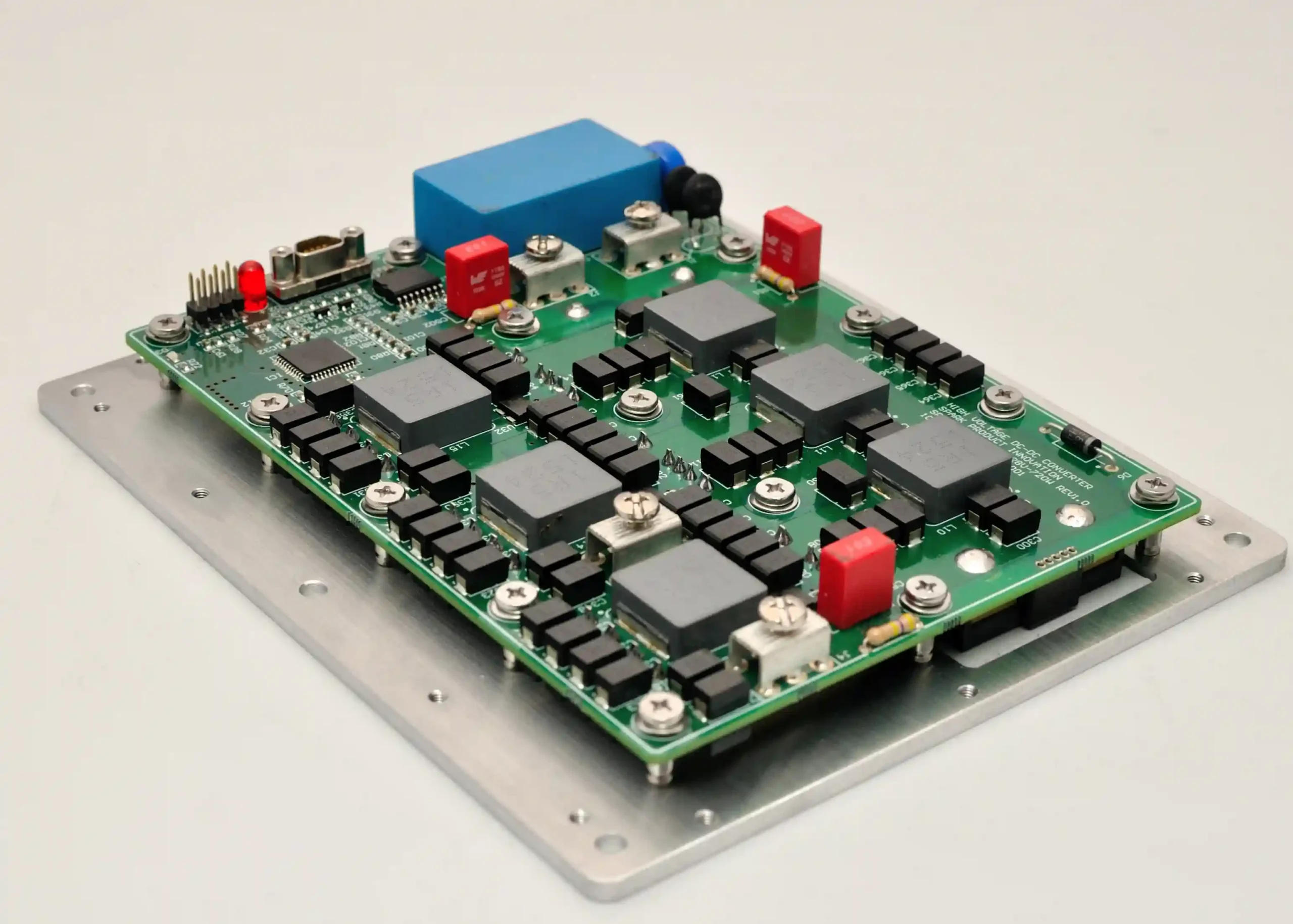
A redundant high-voltage DC/DC conversion stage converts the aircraft’s 400V-700V high-voltage bus to 24V for the secondary power system.
The converter architecture was designed around very high power density to satisfy the demanding Size, Weight and Power requirements of the application.
High-Current Power Switching:
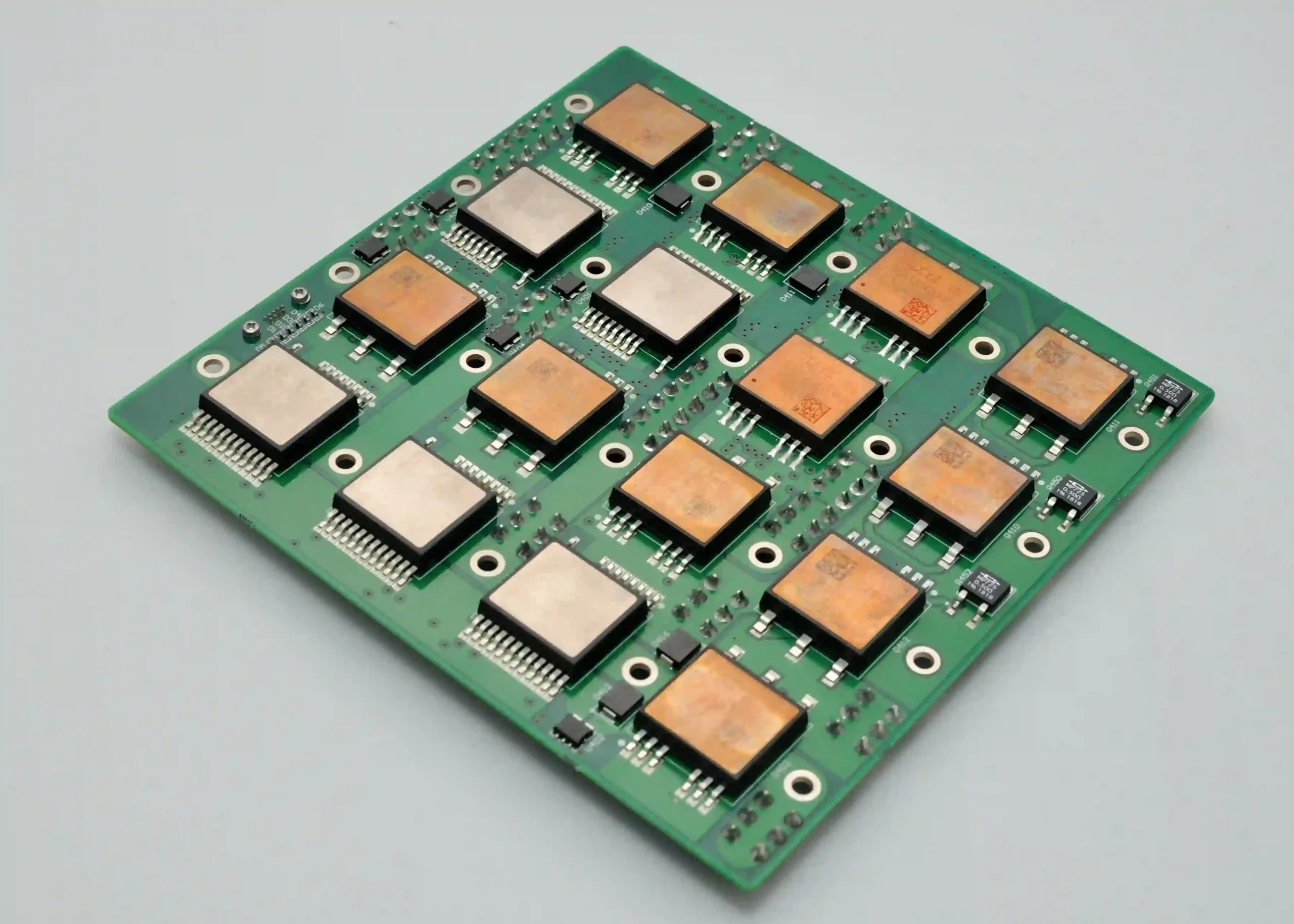
The Power Control & Protection Module uses high-current power MOSFETs to switch up to 600A between primary and auxiliary power sources.
Base-plate cooling provides a direct thermal path from the power electronics into the enclosure, supporting high-current operation within the restricted mechanical envelope.
Redundant Power Control & Protection:
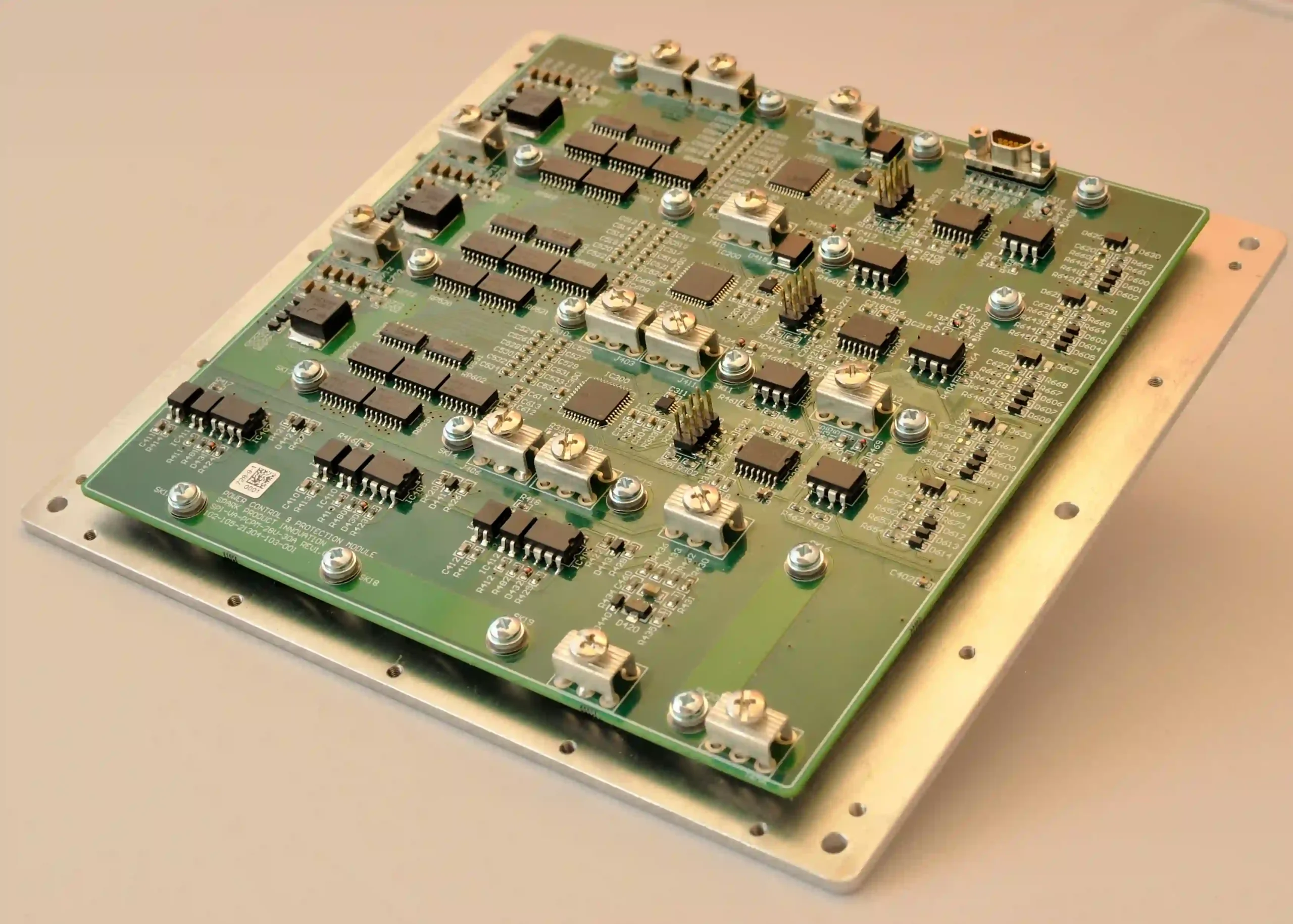
The control electronics implement 2oo3 majority voting together with a dual-redundant system architecture to increase overall system reliability and Mean Time To Failure (MTTF).
Embedded microcontroller electronics collect housekeeping data and system status while providing the external communications required by the wider avionics platform.
Ruggedised Packaging & Platform Integration:
The avionics power distribution system is built from several fully packaged electronic PCB assemblies connected by custom wiring harnesses. The electronics are housed in lightweight ruggedised plastics and use high-reliability Amphenol connectors for operation in a demanding shock and vibration environment.
The modular architecture allows the number of electronic modules to scale with only minor software and connector changes. Following detailed engineering, prototyping, testing and technical demonstrations, Spark continued to support the customer with integration into the wider aviation platform.