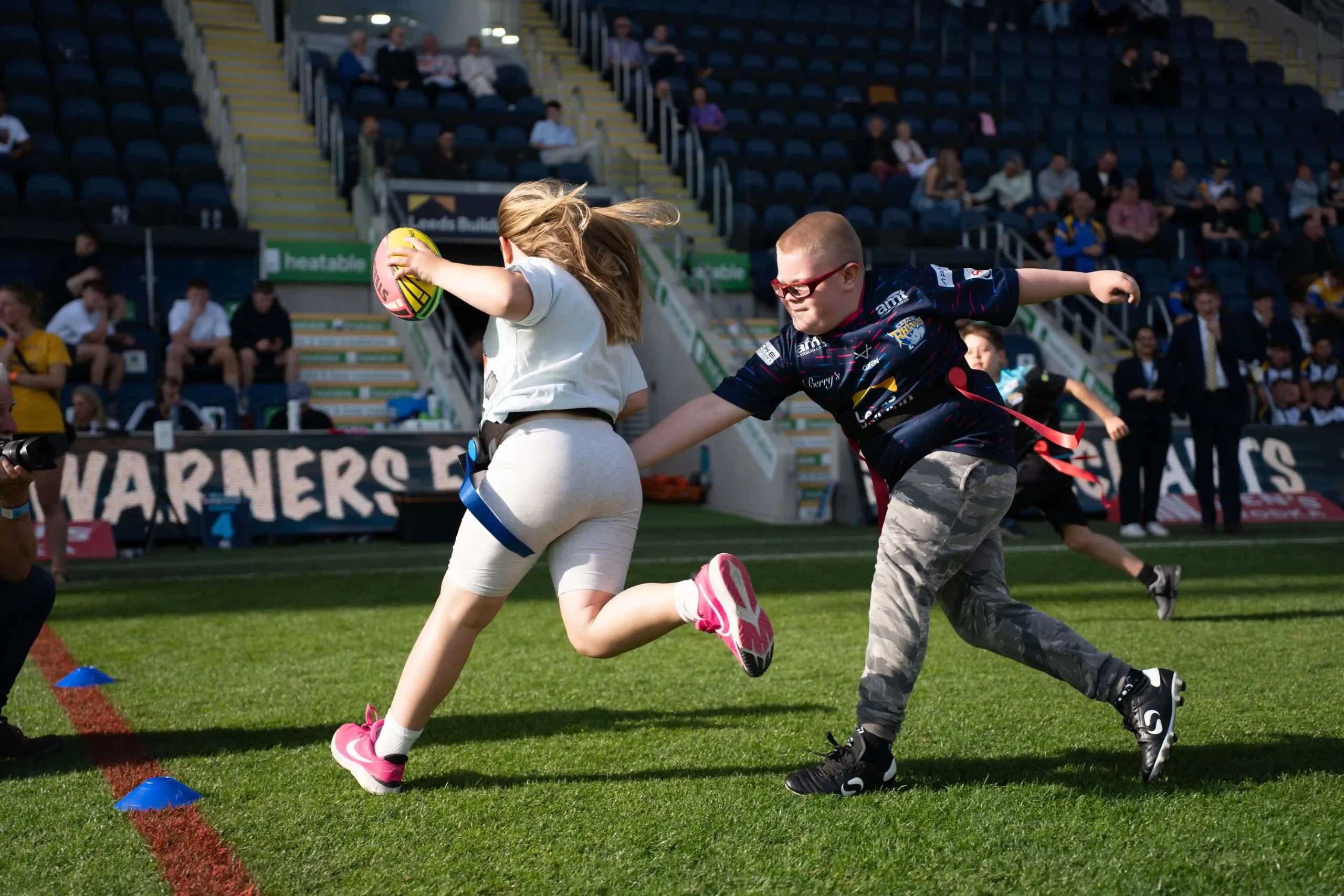
Sensory Tag Rugby Belt: Assistive Wearable System for Inclusive Sport
A complete architectural overhaul and redesign of an assistive sensory tag rugby system for the charity Cerebra. The project delivered a robust, low-cost wearable belt featuring multi-sensory feedback and low-power RF pitch-side communication, enabling children with diverse sensory and brain conditions to participate fully in inclusive sport.
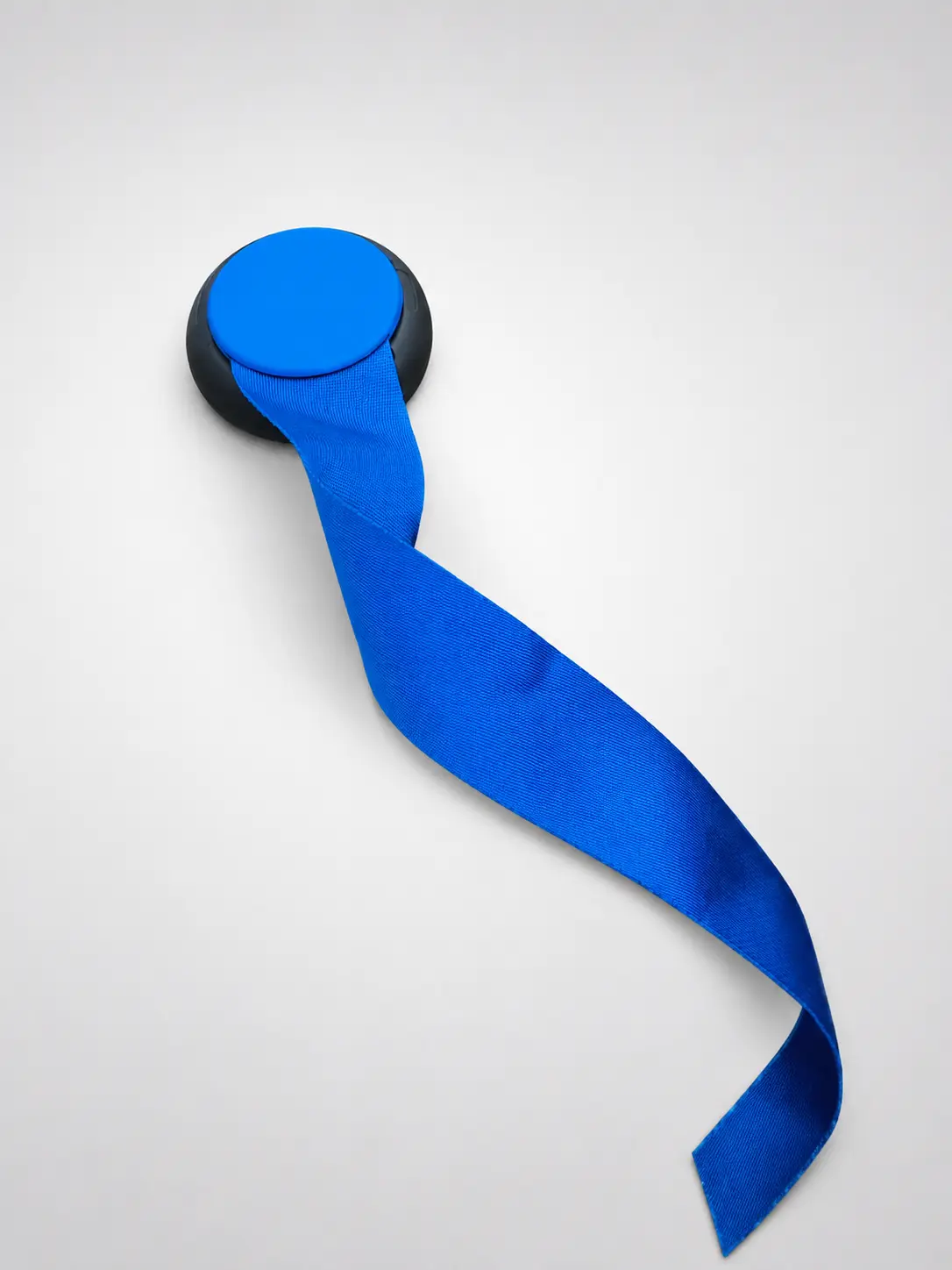
Key Features:
- STM32 MCU: Ultra-low power STM32 maximises battery longevity.
- RF 433MHz Pitch-Side Telemetry: Low-power wireless communication.
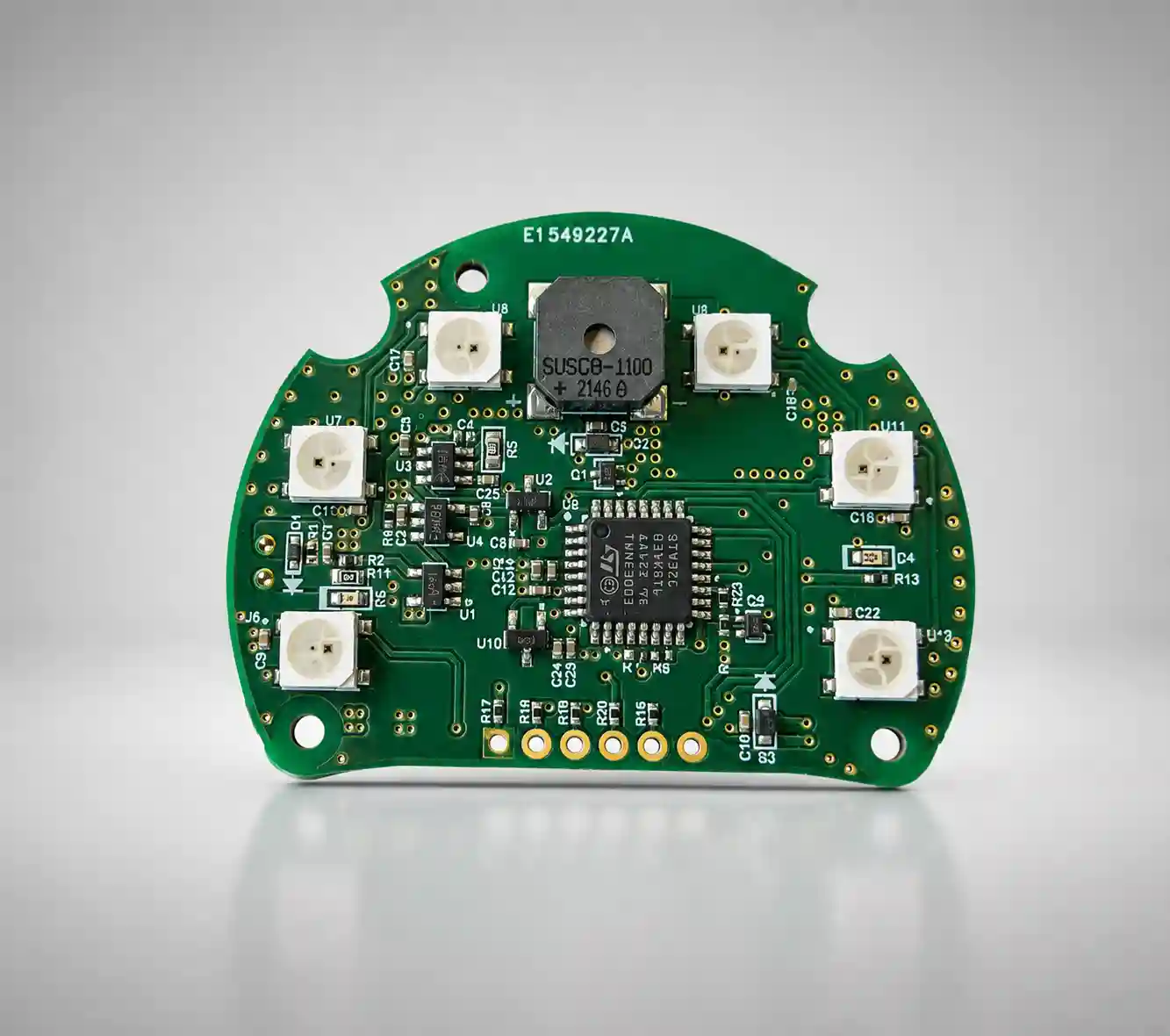
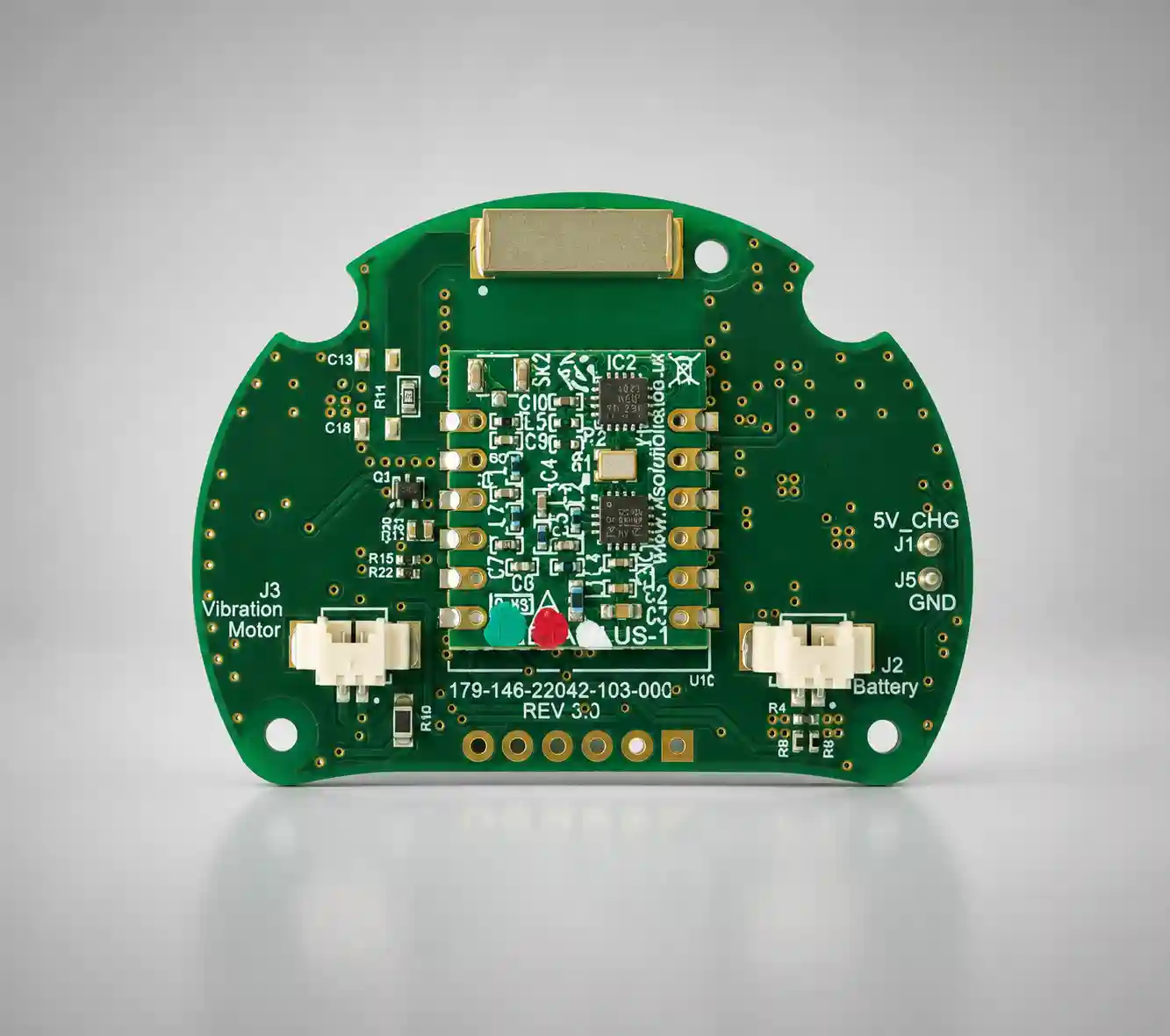
- Wearable PCB: Layout engineered to fit strict Z-height constraints.
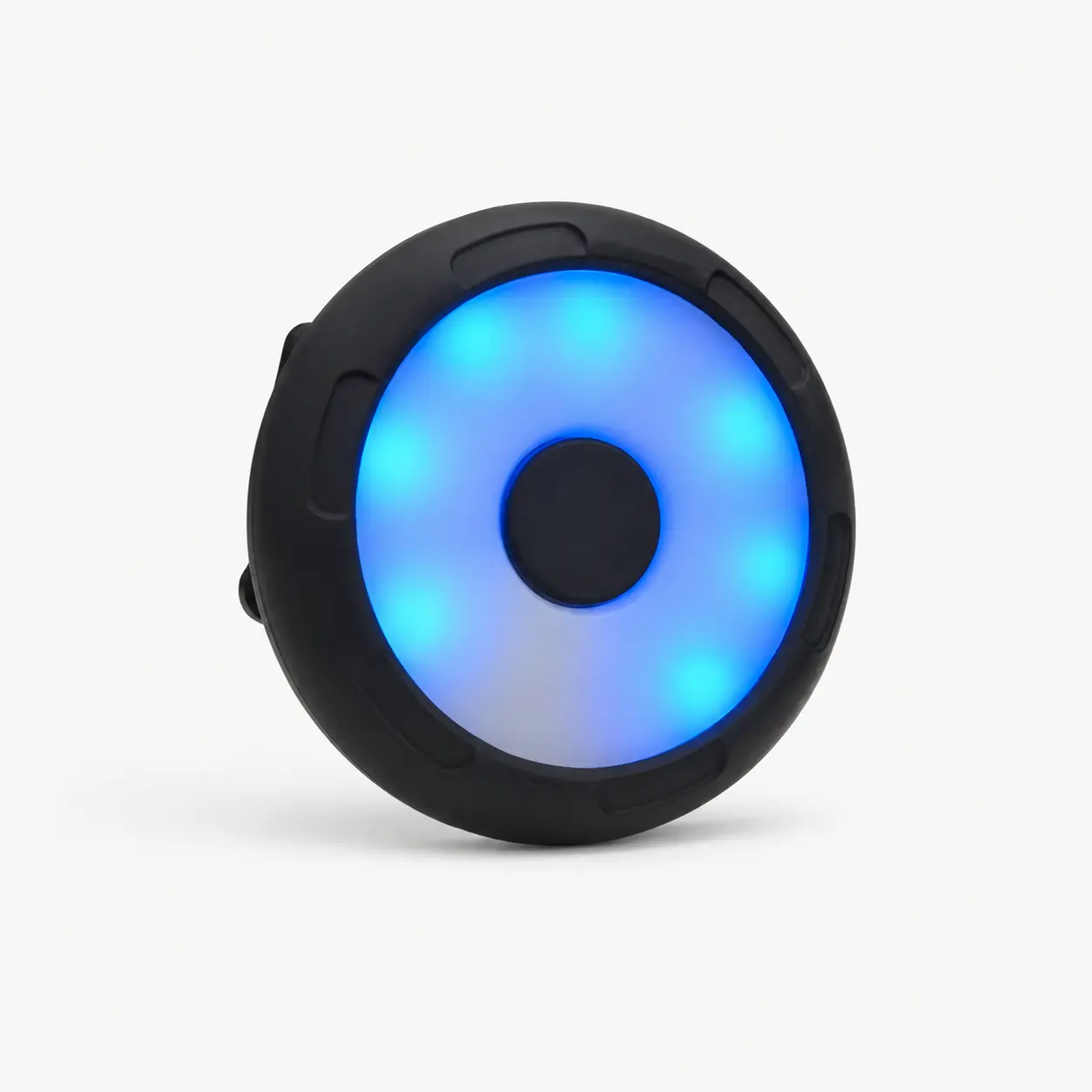
- Multi-Sensory Feedback: High-visibility LEDs, acoustic buzzer, and haptic vibration.
- Analogue Tag Sensing: Cost-effective tag decoding.
- Enclosure Integration: Pre-manufacture 3D spatial studies ensured right-first-time fit.
- Integrated BMS Docking: Automated load isolation and low-power lockout during charging.
Ultra-Low-Power Architecture
Operating on a rechargeable lithium coin cell required aggressive power management. A digital Hall effect sensor and hardware load switch automatically isolate high-draw peripherals, keeping quiescent leakage current to an absolute minimum.
The STM32 MCU leverages ultra-low-power modes to minimise energy consumption during idle periods, remaining in deep sleep until hardware interrupts trigger instant event processing.
Mechanical Enclosure & Integration:
To ensure seamless integration within the sleek, curved enclosure, comprehensive 3D spatial studies were conducted alongside PCB layout. Resolving strict Z-height constraints early enabled pre-tooling adjustments for right-first-time fit and function, eliminating costly enclosure re-spins.
De-Risking Through Simplification:
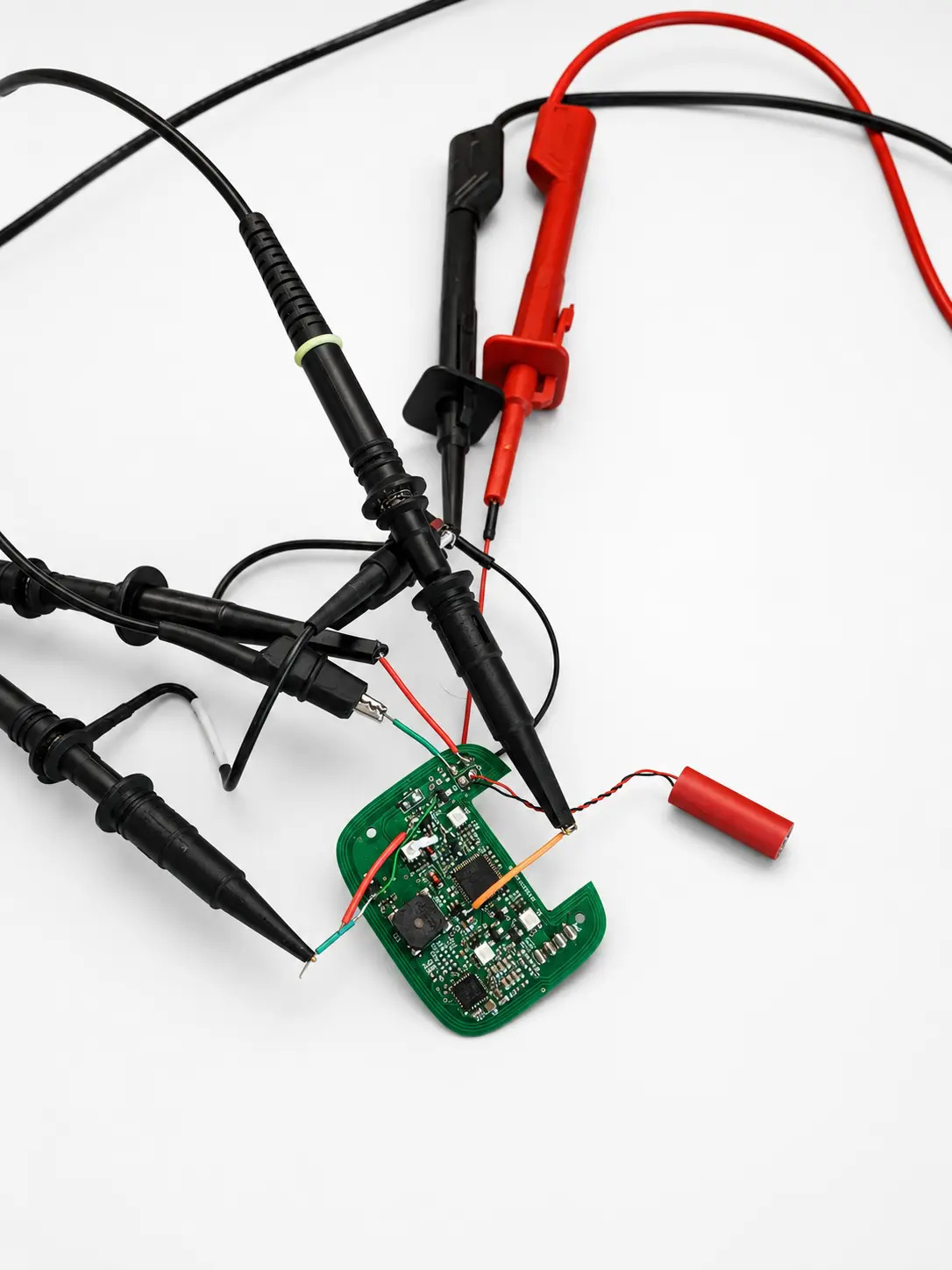
Approached with an existing, non-functioning prototype, we rapidly redesigned the architecture by replacing a complex NFC system with a single analogue Hall effect sensor. This helped in de-risking the engineering, getting the project back on track, and drastically reducing unit cost, board space, and firmware complexity.
Wireless Telemetry & Antenna Diversity:
To compress development timelines and de-risk regulatory compliance, an off-the-shelf 433MHz RF module was integrated with a custom Pi matching network for optimal impedance. A dual-footprint PCB layout was implemented, allowing flexible field-testing with either a compact ceramic chip antenna or a solid-core wire antenna to maximize range once sealed inside the enclosure.
Field Trials & User Impact:
Following successful development, the belt underwent real-world field trials with the Leeds Rhinos Foundation and Saracens. Client feedback confirmed the success of the design: “Positive testing with the Leeds Rhinos Foundation and Saracens. The participants really loved the concept, and we’ve learned a lot from the sessions.”